What Changes After Six Months of LeadIT Coaching?


Four IT directors. Seven leadership competencies. Measurable improvement.
Executive communication improved by an average of 31% among four IT leaders who recently completed our LeadIT Executive Coaching program. But the more interesting story is what changed in how these leaders approached their responsibilities.
Having spent years leading IT organizations, I’ve seen how difficult it can be for talented technical leaders to make the transition from functional expert to effective executive. That’s why we designed LeadIT around the specific competencies IT leaders need, with coaching grounded in the real challenges they face every day.
Our latest coaching engagement offers a useful look at what that approach can accomplish.
1. Executive communication showed the greatest improvement.
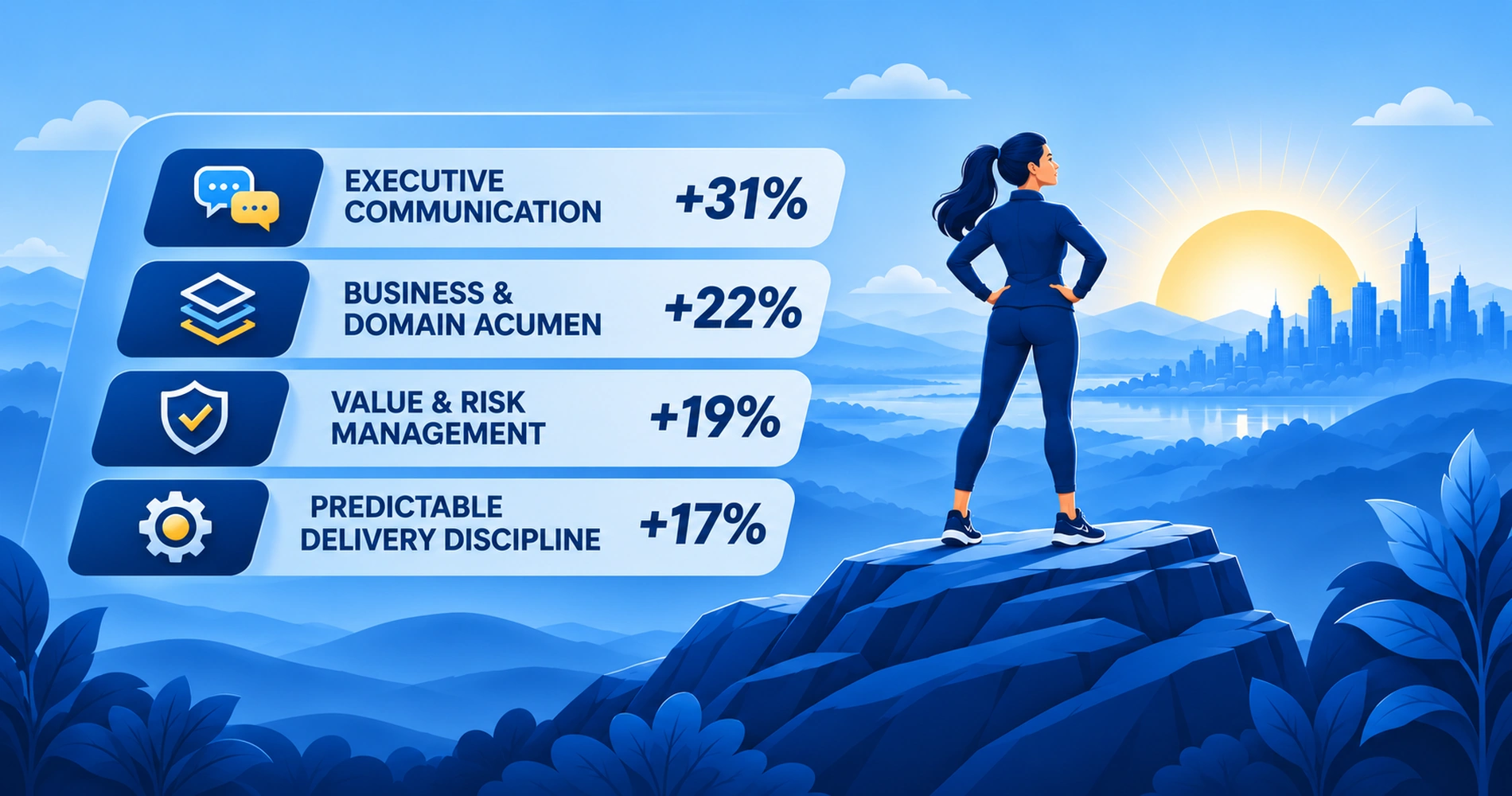
Across the group, scores for Executive Communication for Decisions increased by an average of 31% improvement. This is excellent but not unusual with our LeadIT approach.
This competency is about much more than presentation skills. It measures the ability to frame discussions around decisions, lead with recommendations, anticipate executive questions, and translate technical issues into business terms.
We saw those capabilities develop throughout the engagement. Leaders became more effective at getting to the point, adapting their level of detail to the audience, and focusing conversations on outcomes, risks, and decisions rather than operational activity.
That’s an important shift. Executives and business stakeholders don’t need to hear everything their IT teams have accomplished. They need to understand what matters to them and where their attention or decisions are required.
2. Improvements extended beyond communication.
Executive communication was the standout result, but participants also reported meaningful progress in other leadership competencies:
- Business & Domain Acumen + 22%, reflecting stronger ability to connect IT decisions to business and organizational priorities.
- Value & Risk Management + 19%, strengthening how leaders evaluate risks, communicate implications, and consider alternatives.
- Predictable Delivery Discipline + 17%, reinforcing the ability to manage execution with clearer expectations and accountability.
These are not generic leadership attributes. They’re observable behaviors that influence how effectively an IT leader operates.
Together, the results suggest something important: when leaders improve how they think about business priorities, risks, and decisions, they also become more effective at communicating and managing the work.
3. Real work became the training ground.
One of the most valuable aspects of LeadIT is the opportunity to apply coaching immediately to real-life situations.
Participants weren’t working through hypothetical leadership exercises. They were preparing executive presentations, navigating organizational changes, managing difficult conversations, and addressing current business challenges.
Our coaches — all former senior IT executives — could challenge assumptions, offer practical alternatives, and help participants rehearse how they would approach these situations.
The closeout observations highlighted greater confidence in executive presentations, negotiations, and other important leadership moments. Participants also described becoming more intentional about how they structured their messages and adapted their communication to different audiences.
This is where lasting leadership habits begin to develop: through preparation, practice, candid feedback, and repetition.
What the Numbers Tell Us
We evaluated seven IT leadership competencies using participant assessments at the beginning and end of the program. And while it’s important to recognize that these results represent a small group, they also not dissimilar from the results of other cohorts. It’s tangible evidence of development in capabilities that matter to effective IT leadership.
Personally, my satisfaction comes from seeing that progress translate into greater confidence and effectiveness. A leader who once struggled to move beyond technical detail can lead conversations about business priorities, risks, and decisions.
That’s the change we’re looking for — not simply a more polished executive presentation, but an IT leader who is better equipped to lead.
And it’s why I believe effective executive coaching should be grounded in real work, informed by experience, and measured against leadership competencies meaningful in IT’s context.