Is AI really going to solve that pesky change management problem we have?

This Week with CIOs
Is AI really going to solve that pesky change management problem we have?
That’s the question we recently raised with our community of IT leaders.
The discussion that followed was less about AI itself and more about a pattern CIOs have seen repeated for decades.
Companies invest heavily in technology. Then, dramatically underestimate the organizational work required to get value from it.
The pilot is not the transformation
Imran Abid, Manager BI & Analytics at Freedom Mobile, captured the tension directly:
“Companies say they’re ‘adopting AI,’ but what they’re really doing is accumulating tools without changing how decisions get made.” That distinction sat at the center of the discussion.
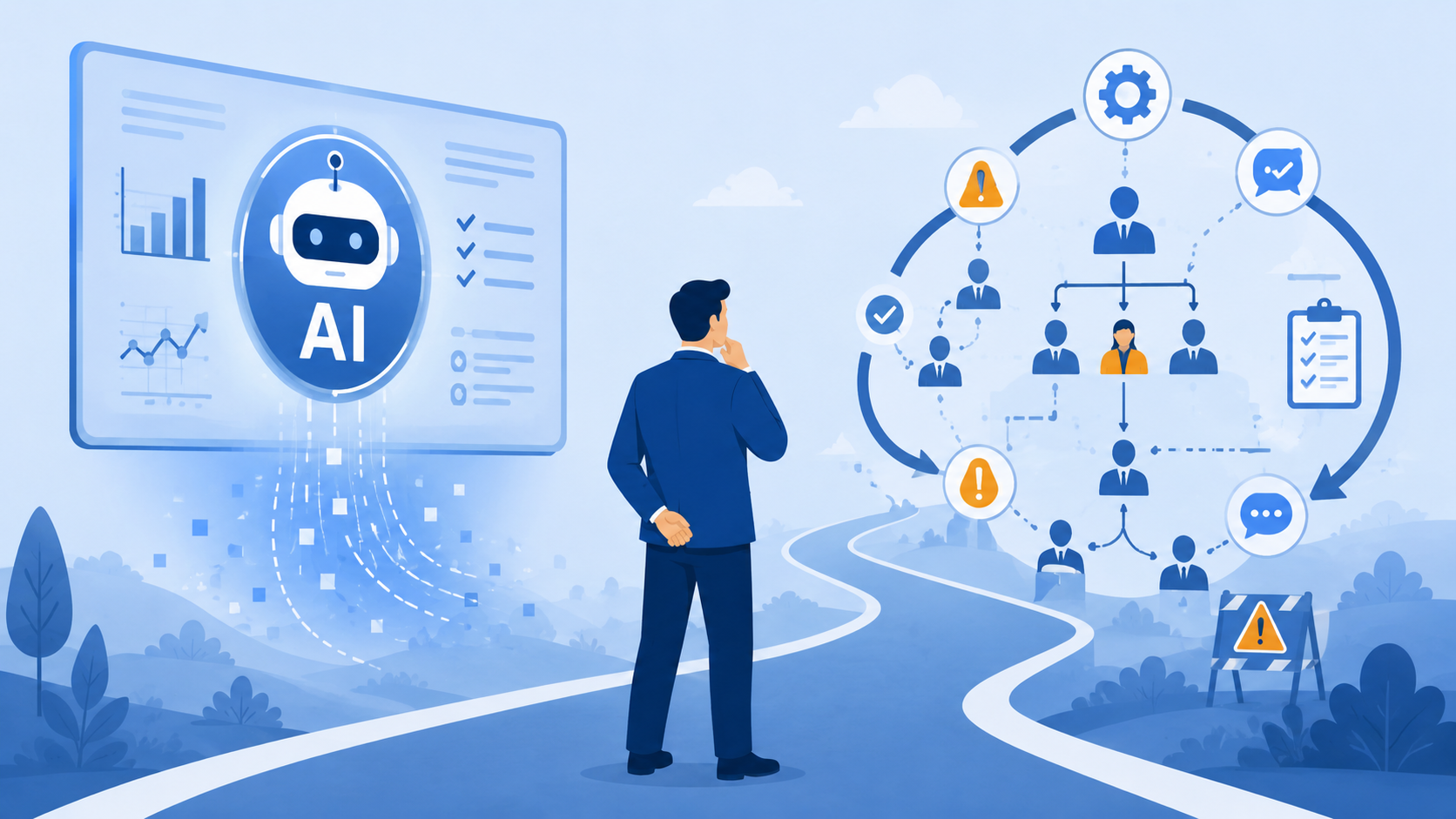
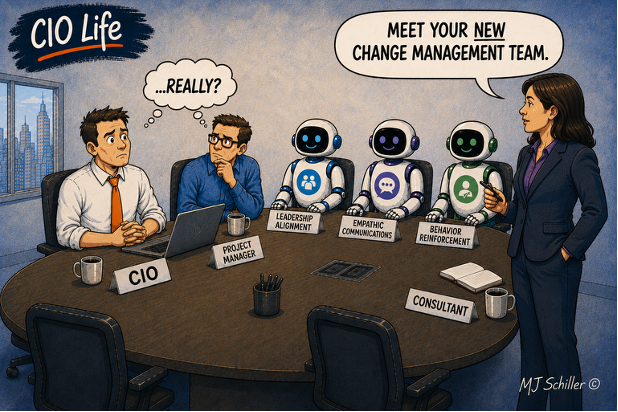
Changing how work actually happens inside an enterprise is slow, political, operational, and deeply human. AI can generate outputs and even drive processes. However, it cannot create executive alignment, redesign workflows, reinforce behaviors, or convince managers to lead differently with the new technology.
And yet, many organizations still appear to be treating those things as secondary implementation details rather than the core challenge itself.
The part everyone keeps trying to skip
Vincent Roy, Global CIO at Voltalia nailed it: “Technology gets the budget. People get the change. And companies still underestimate which one is actually harder.”
In short, companies will fund the technology implementation but skimp on the organizational change required to absorb it.
We’ve seen the movie before:
- The technology works
- The organization stalls
- The impact is barely felt
Then, the discussion shifts toward disappointment with the technology itself and the absence of ROI. Not because the tools failed, but because the operating model never changed to fully leverage the technology.
Here’s the biggest challenge of our amazing new AI era: How do we maintain the managerial energy and operational discipline required to reinvent how work gets done as the technology changes around us so quickly. Because, as always, the hardest part of transformation is almost never the technology.